Lord of Dreamsesports where skill = income
A 2D MOBA-RPG built on the mythology of Eurasia. A tournament arena with guaranteed prize pools and a legal marketplace for in-game assets. We're already battle-testing the economy live — on our second project, FluxZone.
What the abbreviations on this page mean▾
Investor decks love acronyms — here are the ones used below, spelled out.
- MAU
- — Monthly Active Users — unique users in a month
- DAU
- — Daily Active Users — unique users in a day
- ARPU
- — Average Revenue Per User
- ARPPU
- — Average Revenue Per Paying User
- LTV
- — Lifetime Value — total a customer brings over their lifetime
- CAC
- — Customer Acquisition Cost
- churn
- — share of customers lost over a period
- netMargin
- — profit after all costs, as a % of revenue
Market and timing
Product
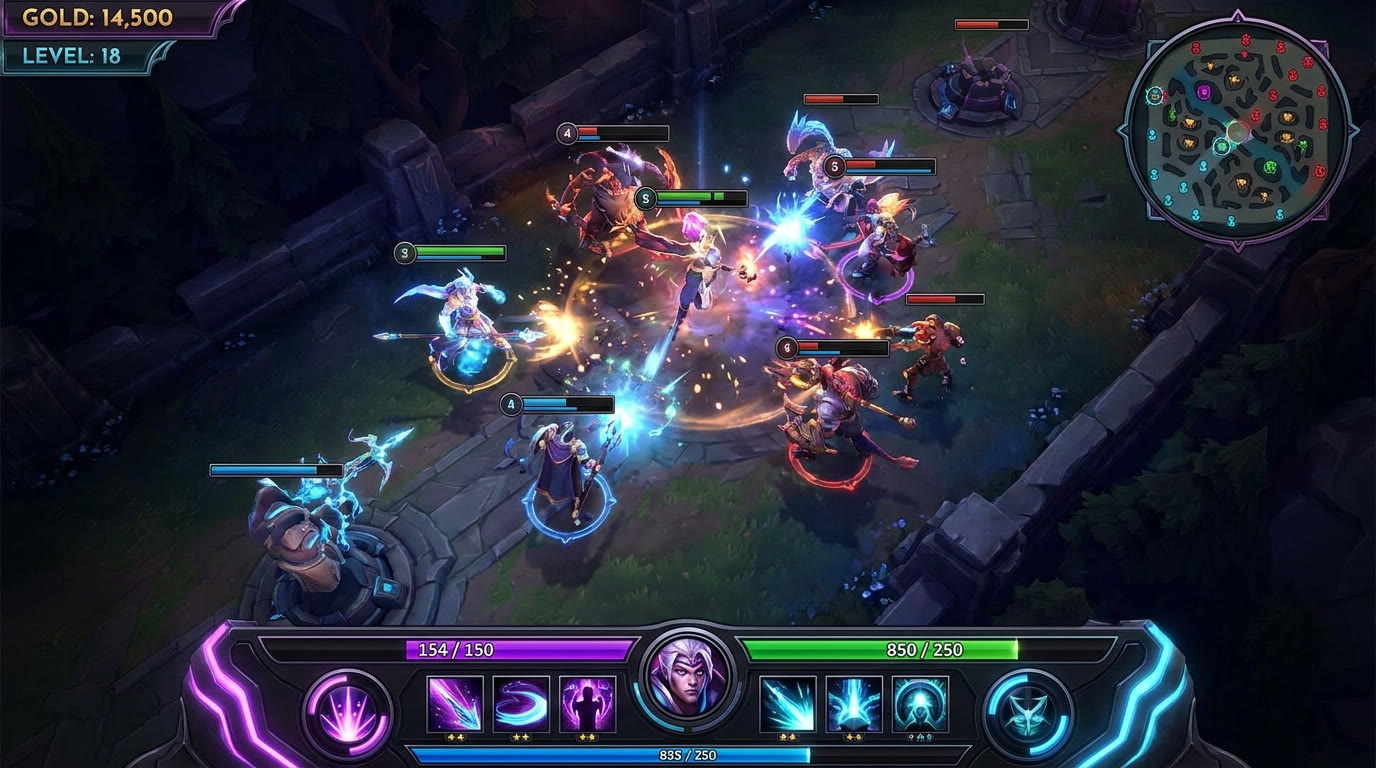
A 2D game built on the Godot engine. Two interconnected loops and a distinctive visual brand rooted in the mythology of Eurasia.
PvE vs. AI
Resource farming, leveling, and permanent gear enchantment.
PvP arena
Tournament matches of 35–60 minutes, team vs. team, on a continuous schedule.
Visual brand
Kazakh and Eurasian mythology, with historically grounded hero narratives.
Lore: heroes from around the world
We launch with heroes from the CIS and Asia, including China and the Three Kingdoms era (the Wei, Wu, and Shu dynasties). Every update brings new cultures and eras. This gives us an endless content pipeline and a precise foothold in key markets (the CIS, China).
The first heroes
The starting roster — one per role. Heroes from across the world: CIS, Asia and Three-Kingdoms-era China. New cultures and eras arrive with each update.
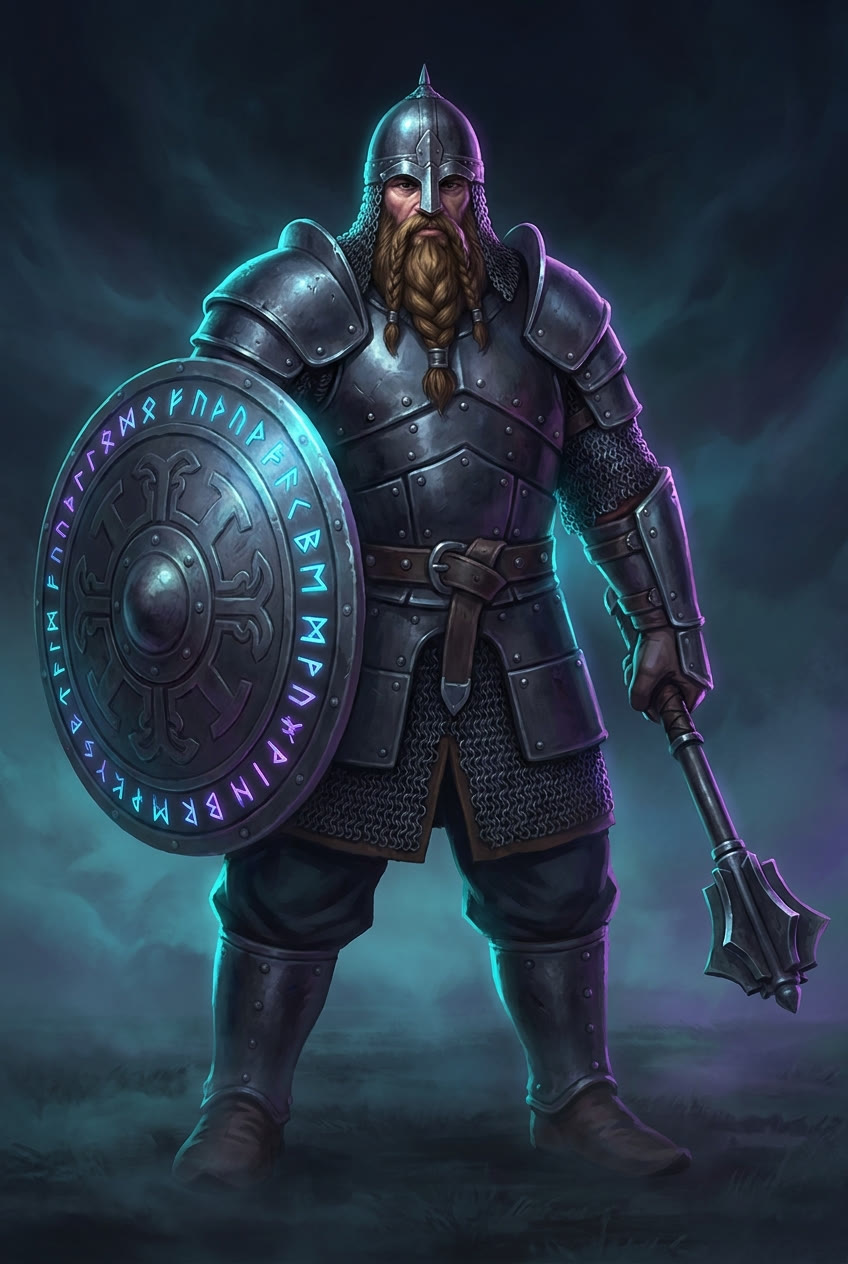 Tank
TankIlya Muromets
Lay still for 33 years — then rose as the shield of the land. Unmovable, unbreakable: holds the line while the team strikes.
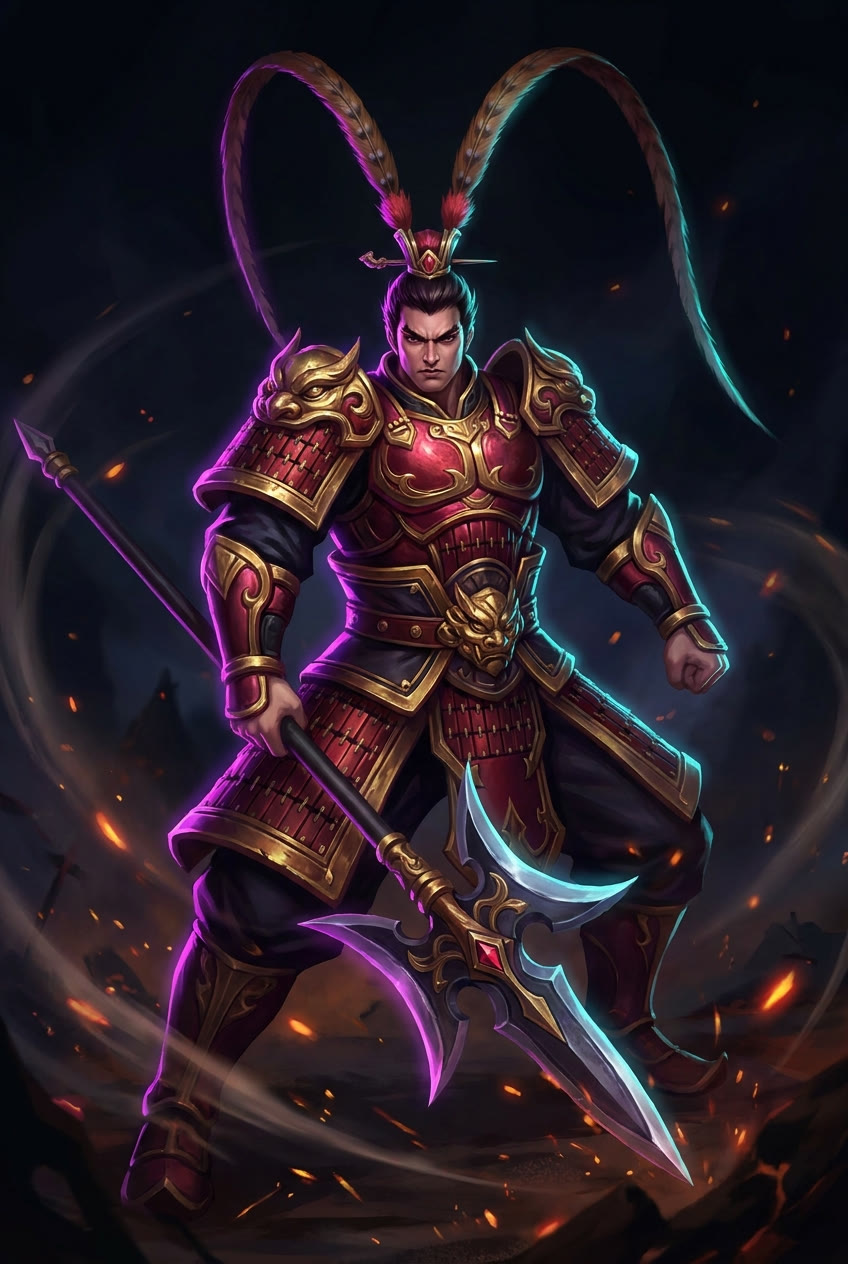 Carry (DD)
Lü Bu 吕布
The mightiest warrior under heaven. 'Among men, Lü Bu; among horses, Red Hare.' Crashes in and shreds the line.
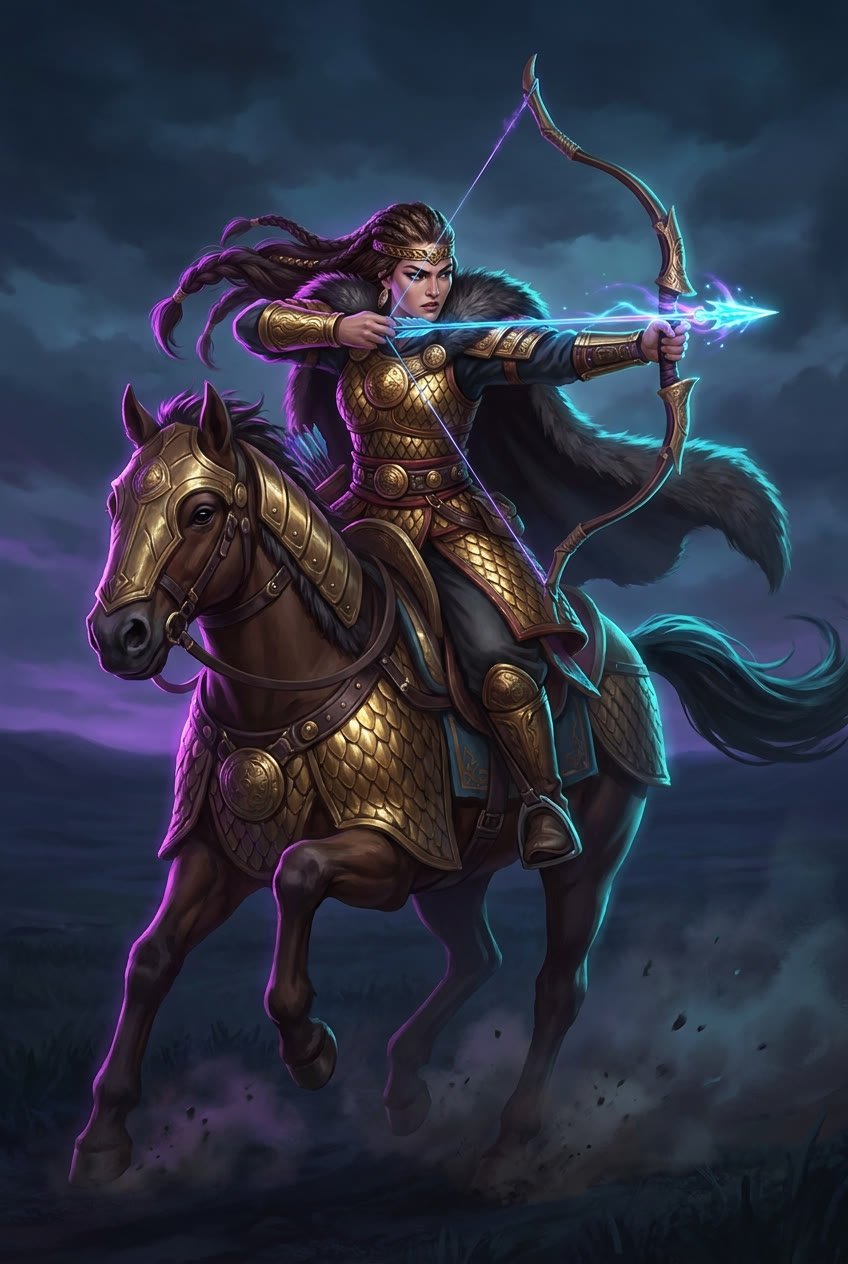 Marksman (RDD)
Tomyris
The Saka queen who crushed Cyrus the Great. Her arrow finds its mark beyond the horizon.
 Mage
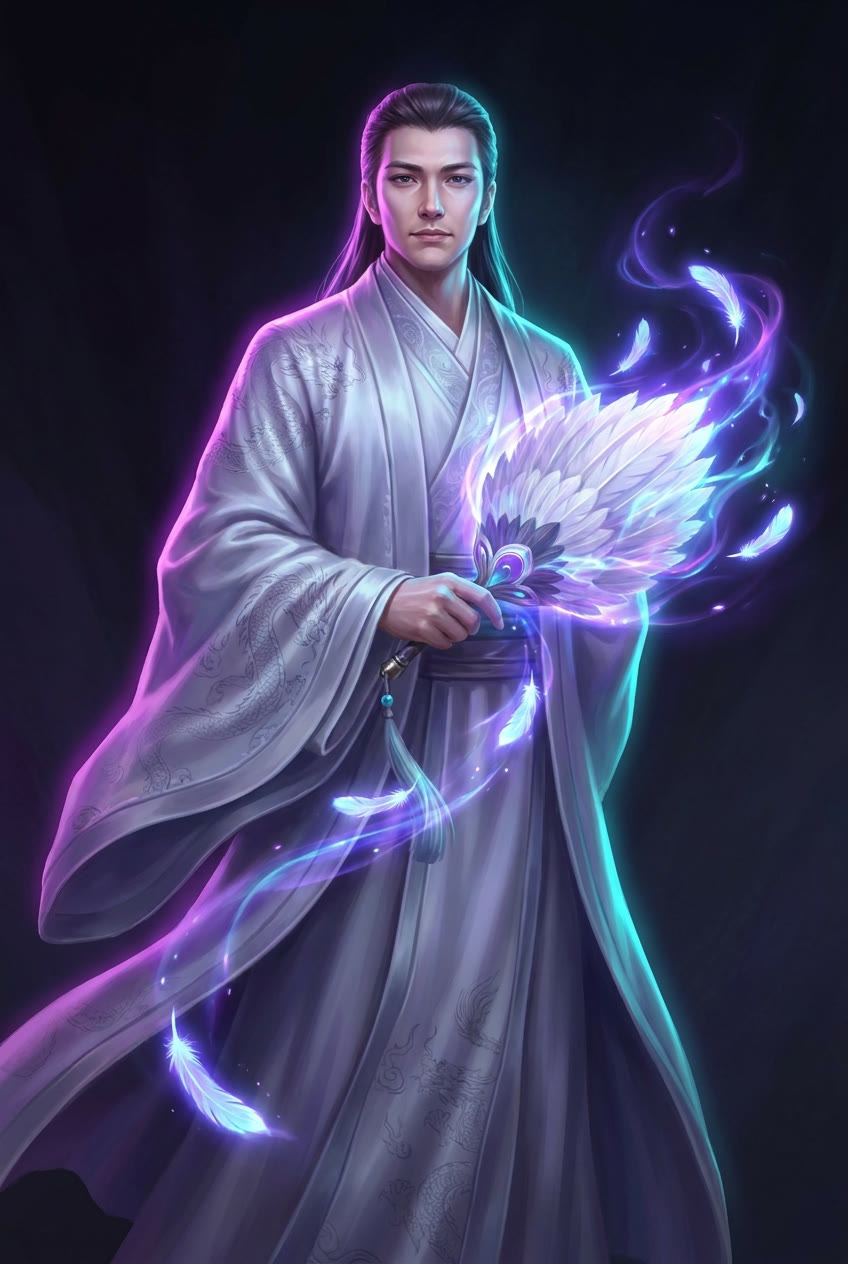
MageZhuge Liang 诸葛亮
The Sleeping Dragon. Won with his mind before the battle began. Wind, fire and foresight are his weapons.
 Support
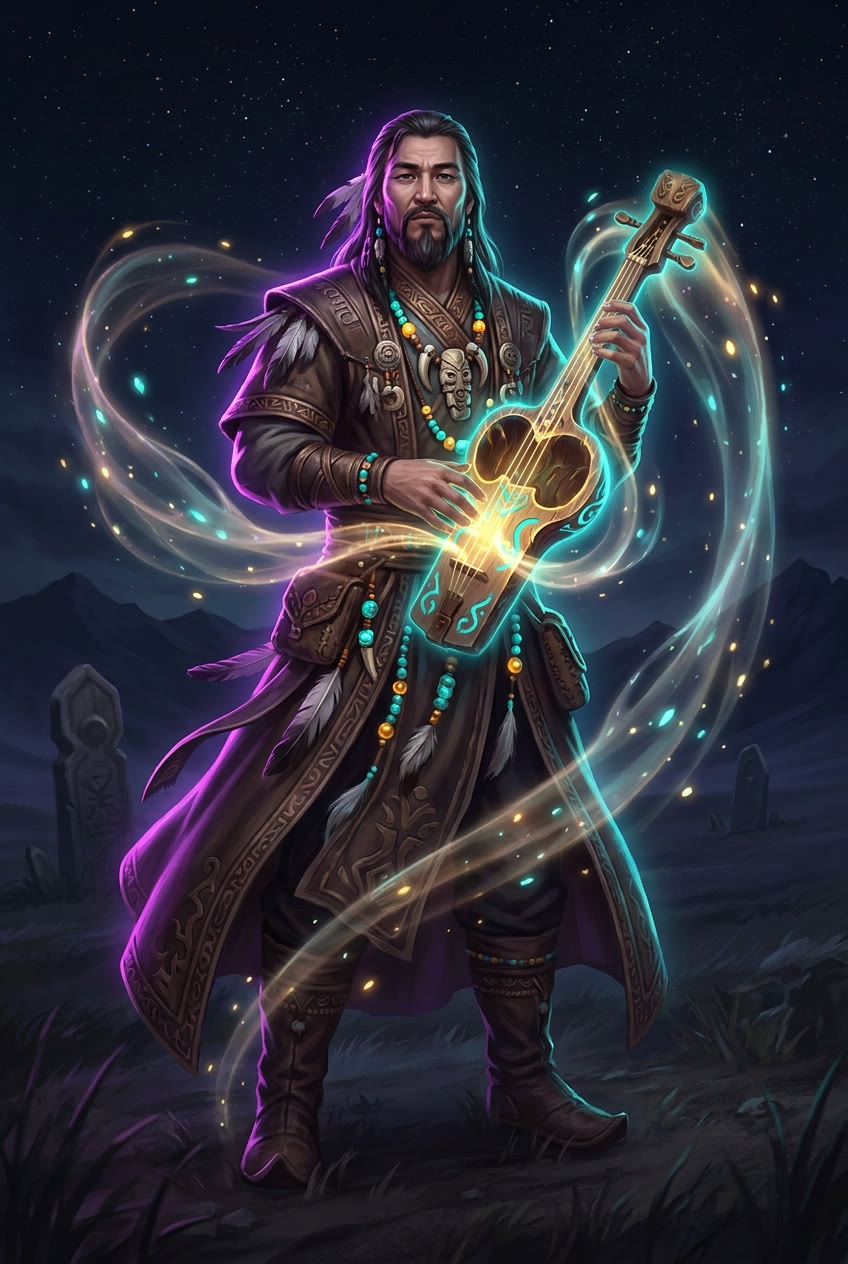
Korkyt Ata
The one who cheated death with the kobyz. His melody heals wounds and raises the fallen.
Gameplay & teaser
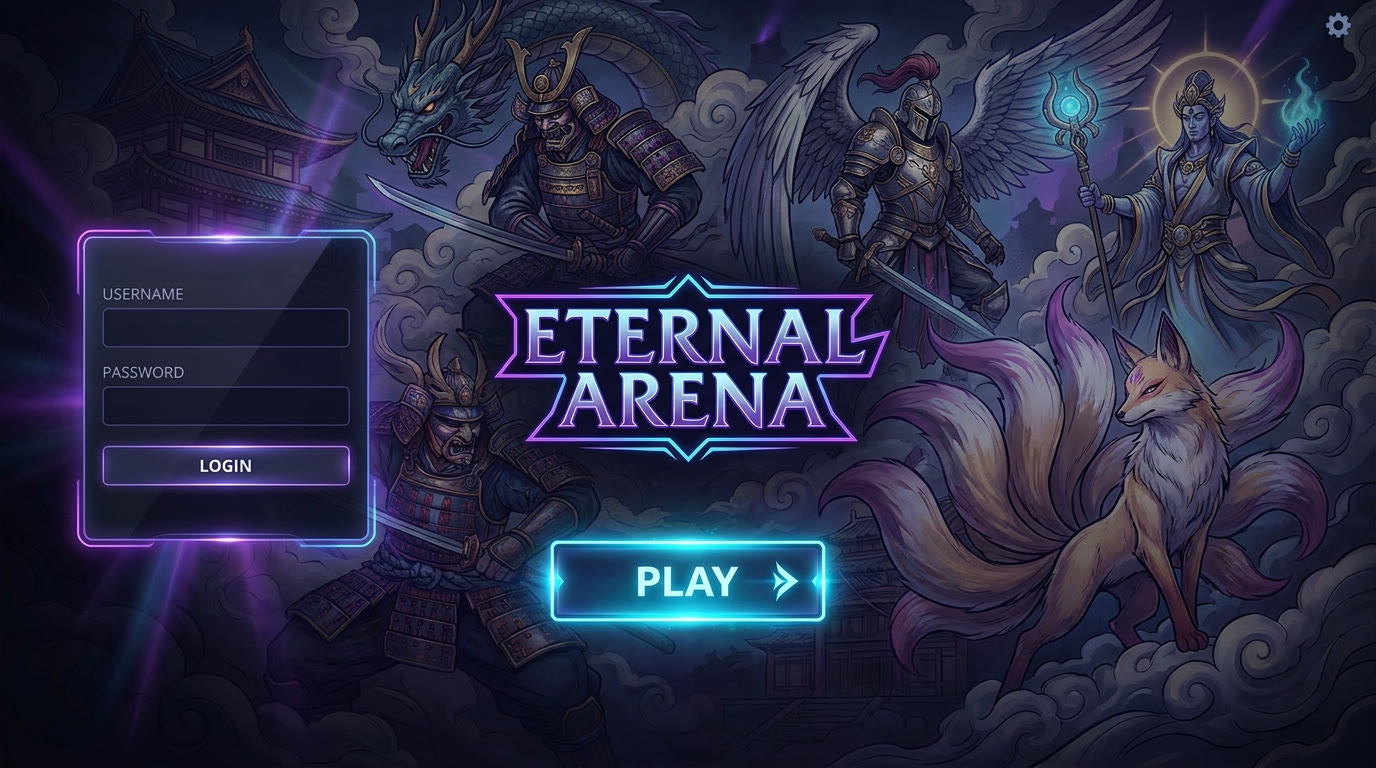
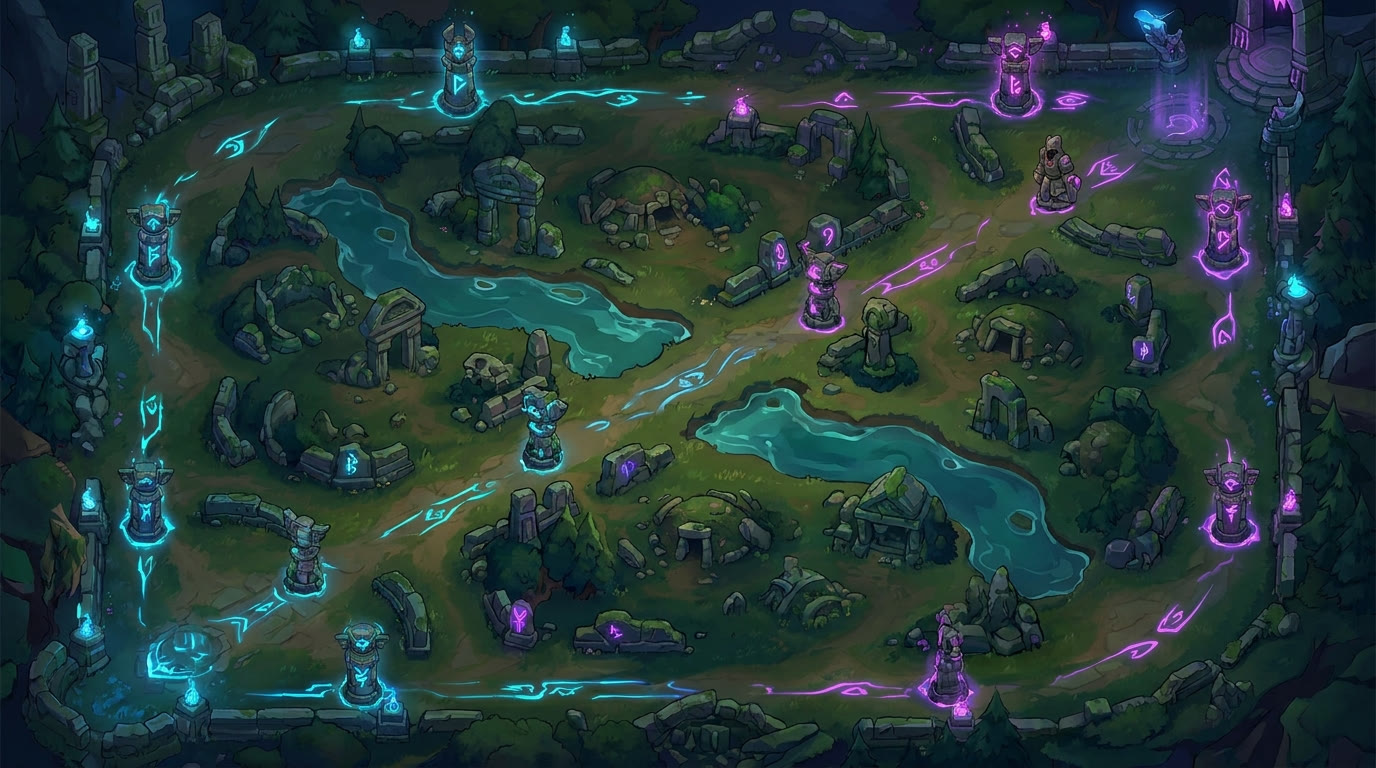
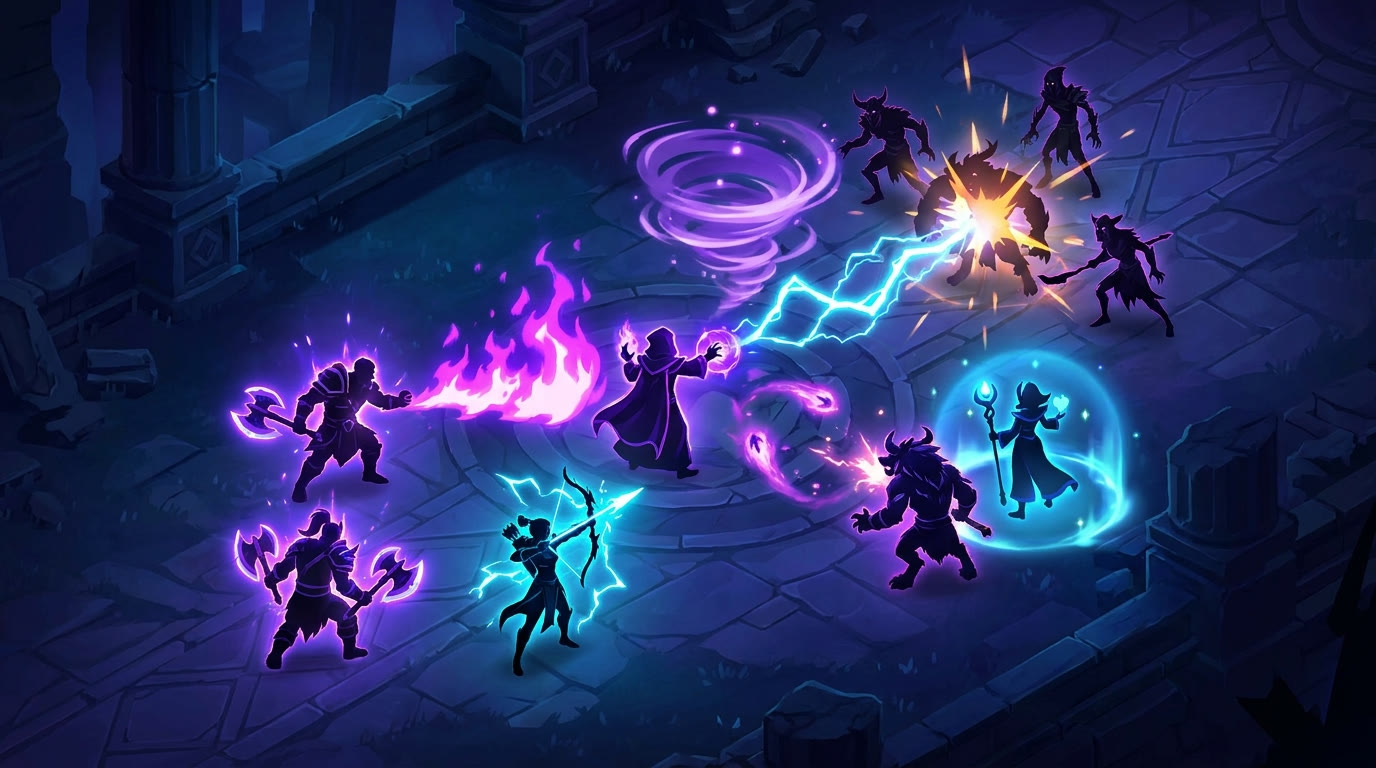
What the game looks like — interface, arena, battles. A one-minute teaser below.
Why 2D on Godot is a strength
The current Godot handles the 3D level we need without taking a cut of revenue or tying our hands with licensing. Combined with an AI-assisted art pipeline it keeps burn predictable: development fits into $1.2–1.5M, and everything else goes into capturing the market rather than burning cash on graphics.
Revenue model
All settlements are in USDT (TRC20). Three independent streams.
Microtransactions
Cosmetics and progression acceleration.
Tournament arena
A "golden ticket" at $10/participant → a guaranteed 90% prize pool, with a 10% platform fee.
Legal resource marketplace
Players sell what they've farmed to top players. A 10% fee (2% for premium accounts).
Monetization depth: what whales spend on
The higher a player aims for the top, the more they spend. The system creates constant demand and large transactions — it's what sustains ARPU in the top segment.
Enchanting up to +16
6 rarity grades — from standard to "Age of Myths." There's a chance to lose an enchantment, so protective microtransaction items create constant demand.
Legendary heroes and items
Top-tier legendary heroes and items sell for ~$2,000 each — the core of whale spending.
Battle Pass + cosmetics
Recurring seasonal revenue and impulse cosmetic purchases.
Bosses and rare drops
A boss spawns at the 25-minute mark, with a 5% drop chance (2–3 items) claimed by the team with the highest DPS and the killing blow — driving the race to the top and marketplace turnover.
Proof: validated in practice
This isn't an idea on paper. Individual economic elements have already been battle-tested in real shipped P2E projects, and the "microtransactions + tournaments + asset marketplace" combination is live on our second project, FluxZone. LoD is the first to bring it all together into a full-fledged product under our control — with a stablecoin economy and no native token, meaning no vector for collapse.
Open FluxZone →Where the money goes
The minimum $2.5M fully covers infrastructure, development and launch. Everything raised above that goes into marketing: more traffic, more players, more revenue from the same product.
| Round | Infrastructure & development | Marketing | Legal & operations | Reserve |
|---|---|---|---|---|
| $2.5M · 10% | $1.20M | $0.85M | $0.25M | $0.20M |
| $3.75M · 15% | $1.35M | $1.85M | $0.30M | $0.25M |
| $5.0M · 20% | $1.50M | $2.90M | $0.35M | $0.25M |
Premium — the engine of the entire economy
A premium account at $20/mo lowers the marketplace fee from 10% to 2%. For any active player who trades resources, this is +EV — premium pays for itself within 1 hour to 3 days of play. That's why our conversion to premium is several times higher than a typical F2P subscription: NOT buying it makes no sense. This is the model's key differentiator and its main driver.
Financial model — three scenarios
Revenue is calculated from the size of the active base at an ARPU of $8.54 — the base scenario broken down by source above. For comparison, League of Legends sits at $2–4, but it has no paid item marketplace, no enchant consumables and no premium that pays for itself in four days of play. The base case is highlighted.
| MAU | Revenue per year | Net profit | To the investor at 10% once the principal is repaid |
|---|---|---|---|
| 500k | $51.2M | $17.9M | $1.79M |
| 1M ✦ | $102.5M | $35.9M | $3.59M |
| 2.5M | $256.2M | $89.7M | $8.97M |
| 5M | $512.3M | $179.3M | $17.9M |
Key assumptions (base case)
- →Premium: 20% of MAU × $19.99. It pays for itself in four days of farming and cuts marketplace commission from 10% to 4%, so it is bought en masse rather than by whales alone — 47% of all revenue.
- →Enchanting: 9% of MAU × $25/mo. A consumable, not cosmetics: scrolls and stones burn on every attempt, and taking an item to Legendary +12 costs 41 expected attempts.
- →Boxes, battle pass, heroes and XP runes: 7% of MAU × $20/mo.
- →Marketplace: 11% of the base buys at $30/mo, blended commission 8.8% (10% standard, 4% for premium). That same turnover feeds the farmers — their income cannot exceed what payers spend.
- →The base is built by the presale (525k keys in the target scenario) and first-year advertising; further growth is financed from profit, not from the round.
- →Net margin of 35% — after servers, team, support, payment fees and ongoing marketing.
What validates the "whale" segment
- ◆Axie Infinity — in-game NFTs and land sold for thousands of $ per unit.
- ◆CS:GO / Dota 2 — rare cosmetic items and knives resell for hundreds to thousands of $; cosmetics are the primary revenue driver for these games.
- ◆The top segment (~10–20% of players chasing the top) generates a disproportionately large share of revenue — the classic "whale" model in every successful F2P/crypto game.
This is a financial model based on market comparables, not a guarantee. The base case assumes successful player acquisition funded by the marketing tranches. The full model, a month-by-month breakdown across the 4 streams, and the investment return model are available in the data room on request.
Unit economics
The key metric for a gaming investor is whether a player pays back. The model is healthy: LTV is several times higher than CAC, with fast payback. And it holds up under a stress test.
| Metric | Base case | Stress test |
|---|---|---|
| CAC (player acquisition cost) | ~$3 (CPI) | $6 |
| Retention D1 / D7 / D30 | ~35% / ~15% / ~7% | half as high |
| ARPU (per active player) | ~$10 / mo | ~$6 / mo |
| Average player lifespan | ~3.5 mo | ~3 mo |
| LTV (revenue per player) | ~$35 | ~$18 |
| LTV : CAC | ≈ 11 : 1 | ≈ 3 : 1 |
| Acquisition payback | < 1 month | ~2 months |
An LTV:CAC above 3:1 is considered healthy — even in our stress test (CPI twice as expensive, retention twice as low) the model stays profitable. The figures are a model built on benchmarks, verified on FluxZone.
Comparison with competitors
Competitors earn billions even with their weaknesses. We take their strengths and fix their flaws — meaning the potential is higher and more durable.
| Parameter | Lord of Dreams | Axie / P2E | Dota 2 / LoL |
|---|---|---|---|
| Settlements | USDT stablecoins | Native volatile token | — |
| Gameplay | A full MOBA | Primitive, for the sake of farming | ✓ |
| Earning through skill | ✓ | Token speculation | ✗ |
| Economy validated | ✓ (on FluxZone) | Collapsed after the hype | — |
| Stakes-based arena | ✓ | ✗ | ✗ |
Axie Infinity
⚠ the volatile token collapsed, primitive gameplay
✓ Stablecoins instead of a token + a real MOBA — demand without collapse.
Dota 2 / League of Legends
⚠ zero earnings for players
✓ The same esports depth + legal earning through skill.
Team
Ilya Guznenkov — founder
In games since the age of 10 (22 years of experience), an expert in MOBA, MMO, RPG, and strategy titles. He has shipped 7+ games on contract and contributed to the design of mechanics and economies for real P2E projects — seeing firsthand both how they make money and why they collapse (volatile tokens, founder exits). It's precisely this experience that shaped LoD's safe model: stablecoins instead of a native token, full control of the economy — with no vector for collapse.
Development is led by the DeusCode studio — 35+ specialists across development, AI, Web3, cybersecurity, design, and QA. (Details on the team's projects are available in the data room under NDA.)
Investor terms
- ◆A share of the net profit of the LoD project at a fixed $250,000 per 1% — from 10% to 20%. A share in the project, not the company: no cap-table dilution.
- ◆An accelerated rate of 30% of net profit runs until your entire cheque is repaid. On target presales that is month three.
- ◆After the principal is back — your purchased share (10–20%) in perpetuity, covering every future epoch, level cap and esports season.
- ◆Payouts are automatic, through a smart contract to your own wallet, in USDT. The condition is mirrored in the investment agreement.
- ◆A named legendary hero in your honour and your name in the founders' credits.
The repayment threshold is tied to your own cheque, not to a fixed sum: a 20% investor recovers their $5M at the accelerated rate exactly as the minimum ticket recovers $2.5M. We are open to discussing company equity if you prefer it.
"Net profit of the project" = project revenue − direct costs (servers, payment fees, support, marketing, project team salaries). The model assumes a 35% net margin. Quarterly distribution, open reporting, settlement in USDT. The month-by-month payout model with the exact rate-switch point is in the data room.
Roadmap · 8 months to v1 release
- 1Start + 3 months of development
- 2Closed beta — 1 month of testing
- 3Open beta — 1 month, bug fixes
- 4Pre-launch update — 1 month
- 5v1 release → quarterly updates
Risks and how we close them
Legal
Risk: The tournament arena and the item marketplace touch regulated zones: wagering, payments, KYC/AML.
How we solve it: Tournaments/marketplace — handled through a specialized igaming lawyer and licensing, KYC/AML, and geo-restrictions. Settlements in USDT TRC20.
Anti-bot / anti-match-fixing
Risk: Bots and match-fixing can crash the economy and trust in the arena.
How we solve it: Protecting the economy and match integrity is built into the game's core, not bolted on "later."
Budget
Risk: Game projects routinely overrun budgets and timelines.
How we solve it: 2D/Godot = low, predictable burn.
Financial
Risk: The investor risks the whole cheque at once, before any results.
How we solve it: Milestone-gated tranches — money flows only when targets are met.
Common investor questions
Why only $2.5M for a MOBA/RPG?
Because $2.5M covers development and infrastructure, and from there the project funds itself: the pack presale brings $16M gross at the target 50% of the run, and that profit pays for the closed beta, open beta and release. The investment starts the flywheel; it does not have to carry it for three years.
When do I get my money back?
On target presales — in month three, before a single ordinary player logs in. In the restrained scenario (30% of the run) — month eight. The threshold is your own cheque: 20% for $5M is recovered at the accelerated rate exactly as 10% for $2.5M.
What if the presale flops?
The 30% rate is not tied to the presale. It runs until your cheque is fully repaid, out of any profit — shop, marketplace commission, tournament rake. Repayment simply takes longer. There is no time limit.
Why is your ARPU $8.54 when League of Legends is $2–4?
They have no paid item marketplace with commission, no enchant consumables that burn on every attempt, and no premium that pays for itself in four days of play. Premium alone is 47% of our revenue.
Is this gambling?
No: tournaments are skill-based with a guaranteed prize pool, under a legal structure and licence.
How will you prove the numbers?
The economy is being verified on the live FluxZone project right now.
Sources
- — Newzoo — Global Games Market Report (market size, number of players).
- — DFC Intelligence — estimate of the global gamer audience (3.1B+).
- — Grand View Research, MarketsandMarkets — Web3 / blockchain gaming market forecasts.
- — Public data on the audiences of MOBA titles (League of Legends, Dota 2).
- — Sky Mavis / Axie Infinity — public data on in-game NFT and land sales.
- — Valve — CS:GO / Dota 2 cosmetics as the primary revenue driver (public skin-market estimates).